


Solid Wood vs Veneer Dining Tables: The Quick Answer
When comparing a solid wood vs veneer dining table, the better choice depends on how you use your dining space. Solid wood is strong, characterful and easier to refinish over time, while veneer can offer the look of real wood with excellent stability and a more accessible price point.
For busy family meals, homework, hosting and everyday spills, the finish matters just as much as the construction. A well-made veneer table can be wonderfully practical, while a solid wood dining table can last for decades when cared for properly.
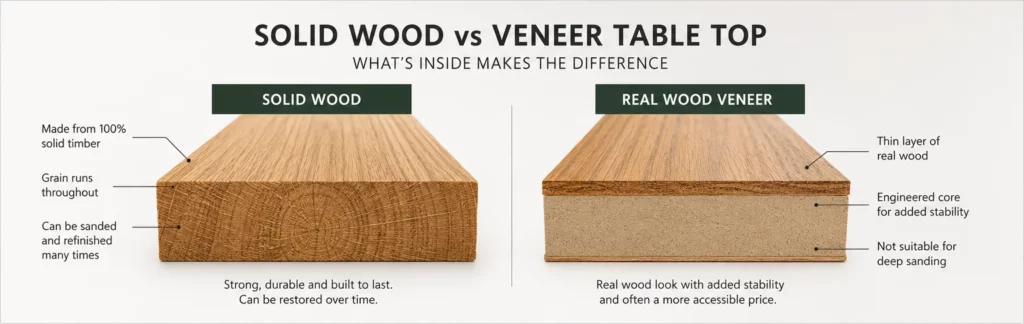
Cross-section diagram showing a solid wood dining table top beside a real wood veneer table top with engineered core.
What Is a Solid Wood Dining Table?
A solid wood dining table is made from timber boards, such as oak, acacia or hardwood, rather than a thin decorative layer over another material. The grain, knots and colour variation run through the wood, which is why every solid wood table has its own character.
Solid wood is often chosen for dining tables because it feels substantial, ages naturally and can usually be repaired more deeply than veneer. Light dents, surface scratches and worn finishes can often be sanded, oiled, waxed or refinished, depending on the surface treatment.
You might prefer solid wood if your dining table is the long-term centrepiece of the home: somewhere for meals, celebrations, games, work and everything in between.
What Is a Veneer Dining Table?
A veneer dining table has a thin layer of real wood applied over a stable core, such as engineered wood. This means the surface can still show genuine wood grain, but the inner construction helps reduce movement.
Veneer is especially useful for larger table tops because it is less prone to the natural expansion and contraction you can get with solid timber. It can also make certain wood looks more affordable, particularly where a fully solid version would be heavy or expensive.
The key difference is repair depth. Because veneer is a surface layer, you cannot sand it back repeatedly in the same way you might with solid wood. Careful maintenance is still straightforward, but heavy scratches, chips or burns need a lighter-touch repair.
For more spotting tips, see our guide to how to tell real wood from veneer.
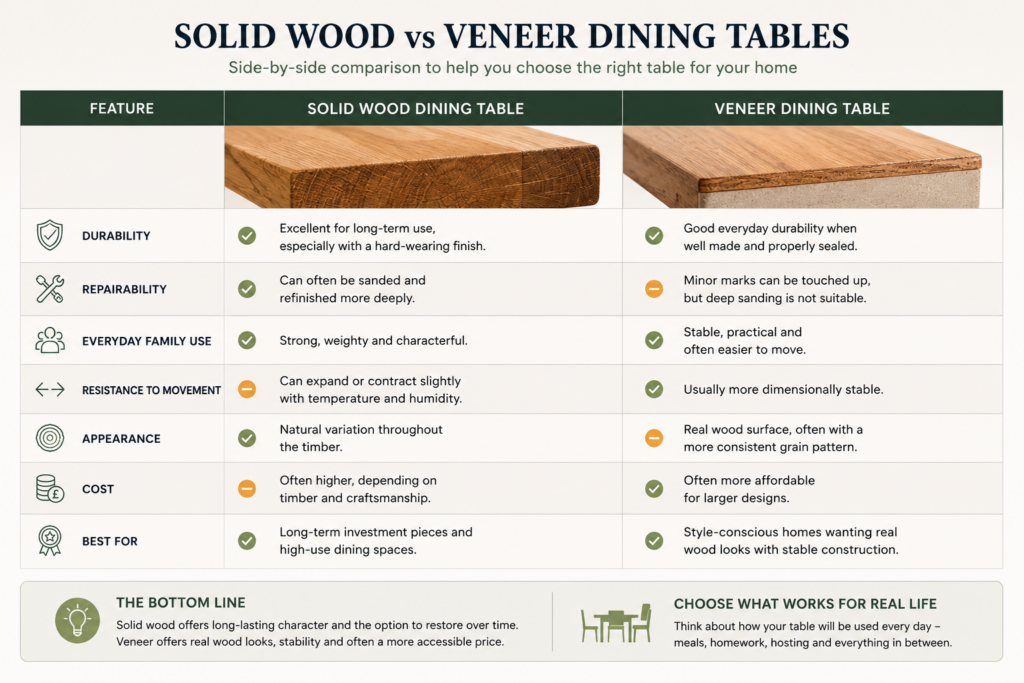
Solid Wood vs Veneer Dining Tables: Quick Comparison
Which Is More Durable for Everyday Dining?
For day-to-day dining, both solid wood and veneer can perform well. The biggest difference is how each table handles knocks, scratches, heat and moisture over time.
A solid wood dining table is usually the stronger long-term option if you want something you can refresh years down the line. However, a veneer dining table with a quality lacquer or protective finish can be very practical for normal household use.
Think about what your table deals with most often:
- Family meals: look for a sealed, wipeable finish.
- Hot plates and serving dishes: use mats or trivets, even on heat-resistant finishes.
- Children’s crafts or homework: choose a surface that can handle frequent wiping.
- Dinner parties: consider an extendable table with a durable top.
- Sunny rooms: avoid placing any wooden table in prolonged direct sunlight, as finishes and timber tones can change over time.
For a traditional family dining room:
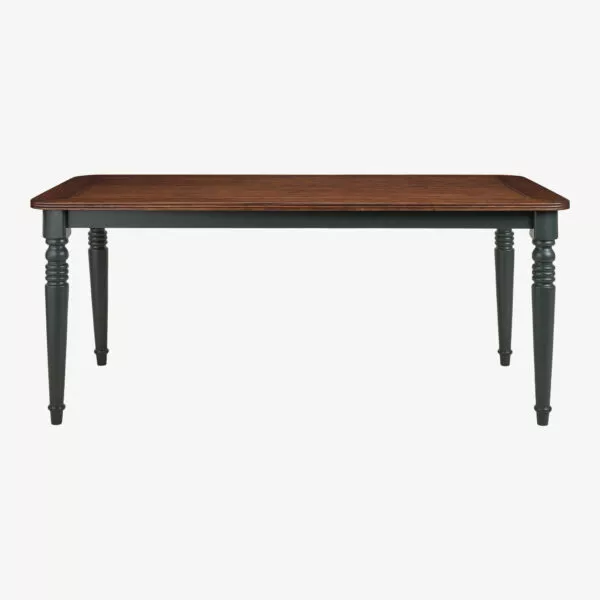
Browse the Queensbury dining range for sturdy painted designs with oak-style tops, generous proportions and a classic country look. It’s a good fit if you want a dining table that feels timeless, practical and ready for everyday family meals.
What About Scratches, Dents and Water Marks?
Light surface scratches
On a solid wood dining table, fine scratches often sit in the finish rather than the timber itself. Depending on whether the table is lacquered, oiled or waxed, they may be improved with a suitable polish, touch-up product or careful refinishing.
On a veneer dining table, light scratches can often be disguised with a matching repair pen or specialist furniture wax. The important thing is not to over-sand, as the veneer layer is thin.
Deeper dents
Solid wood is more forgiving here. Small dents may sometimes be reduced by careful steaming or refinishing, although this depends on the finish and timber type.
With veneer, deeper dents are more difficult because they may damage the surface layer or the core beneath. A colour-matched filler or professional repair may be the better route.
Water rings and cup marks
Water rings are often finish-related. A sealed lacquered table may resist moisture well, but standing water should still be wiped up quickly. Oiled or waxed finishes can feel more natural, but they usually need more regular care.
Use coasters, placemats and table runners for everyday protection, particularly around breakfast spots, children’s seats and serving areas.
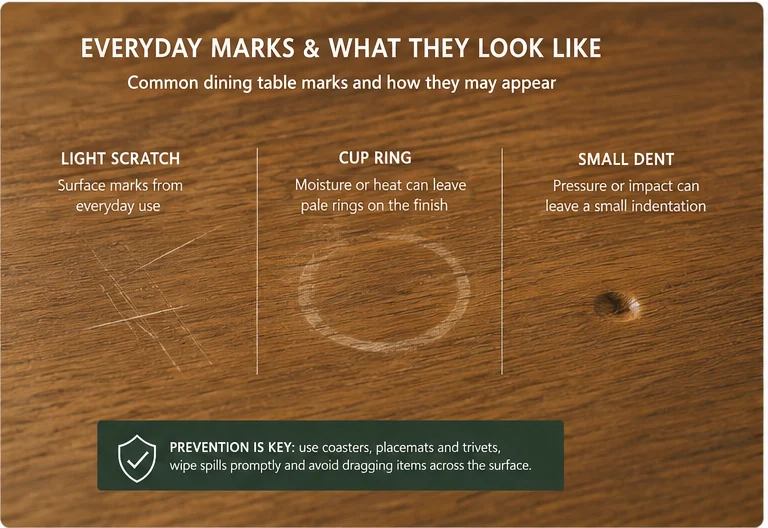
Dining table surface showing common everyday marks including a light scratch, cup ring and small dent.
Dining Table Finishes: Why They Matter
The construction tells you what the table is made from. The finish tells you how it behaves in daily life.
Lacquered finishes
A lacquered dining table has a protective coating over the surface. This can make it easier to wipe clean and more resistant to everyday marks. It is a good option for households that want lower-maintenance care.
A lacquered surface can still scratch, and repairs usually involve working with the finish rather than simply treating bare wood.
Oiled finishes
Oil soaks into the timber and enhances the natural grain. It can give a warm, tactile feel, especially on oak or acacia dining tables.
The benefit is that localised maintenance can be more straightforward. The trade-off is that oiled tables usually need occasional re-oiling to keep them protected.
Waxed finishes
Wax gives a soft sheen and a traditional feel. It works beautifully on characterful woods but is generally less resistant to heat and moisture than a tough lacquer.
For advice on wax finishes, read our guide to caring for wood furniture with lime wax.
For a warm, elegant dining space
Explore the Florence dining collection for beautifully detailed dining furniture with a softer traditional feel. Choose this range if you want a table and matching storage pieces that make the dining room feel considered, welcoming and easy to live with.
Repair Scenarios: What Can You Actually Fix?
Scenario 1: A child presses a pencil into the table top
Solid wood: The dent may be reduced or blended, depending on depth and finish. If it is severe, the area may be sanded and refinished.
Veneer: A shallow mark may be disguised, but deep pressure damage is harder to remove completely.
Scenario 2: A hot mug leaves a pale ring
Solid wood: If the mark is in the finish, it may be treatable with the correct product. More serious heat damage may need refinishing.
Veneer: Treat carefully and avoid abrasive sanding. A professional repair may be best for visible heat marks.
Scenario 3: A knife slips during dinner prep
Solid wood: A deeper scratch can often be improved through sanding and refinishing, especially on a thicker top.
Veneer: The scratch may cut through the veneer layer, so colour-matching and filling are safer than sanding.
Scenario 4: A glass of water is left overnight
Solid wood: Wipe dry, assess the finish and treat promptly. Oiled and waxed surfaces may need maintenance sooner.
Veneer: If the surface is sealed, it may be fine, but moisture entering seams or edges can cause swelling.
The best repair is prevention: use coasters, wipe spills quickly and place hot dishes on trivets rather than directly on the table.
Which Table Is Best for Busy Family Homes?
For a family dining room, choose the table by use first and material second.
A solid wood dining table is ideal if you want a long-lasting piece with natural character and the option to restore it in future. It is a strong choice for large kitchens, open-plan dining rooms and homes where furniture is expected to age beautifully.
A veneer dining table is a smart choice if you want the look of real wood, a stable surface and often a lower price point. It can work especially well in modern dining rooms where a clean, consistent finish is part of the look.
For a clean, Scandi-inspired look
Discover the Edvard Olsen dining range for simple silhouettes, natural wood tones and a lighter modern feel. It’s ideal if you want your dining table to look calm and uncluttered while still feeling practical for daily use.
Size, Weight and Everyday Practicality
Solid wood tables are often heavier, which can make them feel reassuringly sturdy. It also means they may be harder to move when cleaning, rearranging or relocating.
Veneer tables can be lighter, depending on the core construction, which may suit flats, smaller dining spaces or homes where the layout changes often.
As a practical rule, allow at least 90 cm (35 in) of clearance around your dining table so chairs can pull out comfortably. For seating, allow roughly 60 cm (24 in) of table width per person.
For more planning help, see our dining table size guide or our furniture measuring guide.
How to Choose Between Solid Wood and Veneer
Choose solid wood if you want:
- A long-term investment piece
- A table that can often be restored over time
- Natural variation in grain, tone and texture
- A substantial, traditional feel
- A table for heavy everyday use
Choose veneer if you want:
- A real wood look at a more accessible price
- A stable surface for larger table tops
- A lighter or more contemporary design
- A consistent grain pattern
- Lower upfront cost without losing warmth
The most important question is not simply “which is better?” It is “which suits the way we live?”
A dining table has to work hard. It hosts weeknight dinners, birthday cakes, laptops, board games, coffee cups and the occasional spill. Solid wood offers lasting character and excellent repair potential, while veneer offers stability, style and everyday practicality when well made.
Browse our dining tables to compare solid wood, oak-top and veneer-style options, or call us for a quick sizing and selection chat if you’d like help choosing the right fit for your home.



%20–%20Dove%20Grey&url=https://furniture.co.uk/product/florence-large-pedestal-round-dining-table-120cm-dove-grey/&media=https://furniture.co.uk/wp-content/uploads/2023/05/Florence-Pedestal-Table-in-Dove-Grey-1024x1024.jpg)


FAQs
Is solid wood better than veneer for a dining table?
Solid wood is usually better for long-term repairability because it can often be sanded and refinished. Veneer can still be a durable choice, especially when it has a quality protective finish and is used with normal everyday care.
Do veneer dining tables scratch easily?
A veneer dining table can scratch if cutlery, crockery or sharp objects are dragged across it. However, the same is true of many wooden surfaces. Use placemats, coasters and table protectors to keep the finish looking its best.
Can you repair a veneer dining table top?
Yes, minor scratches and small chips can often be improved with colour-matched wax, filler or repair pens. Deep sanding is not recommended because veneer is a thin layer of real wood.
Can a solid wood dining table be refinished?
In many cases, yes. Solid wood can often be sanded, re-oiled, waxed or refinished, depending on the table’s construction and existing finish. Always check the care guidance before starting.
Which dining table finish is easiest to maintain?
A lacquered finish is often the easiest for busy households because it creates a sealed, wipeable surface. Oiled and waxed finishes can look beautifully natural but usually need more regular maintenance.
How can I tell if my dining table is solid wood or veneer?
Check the edges, underside, grain pattern and weight. Solid wood usually has continuous grain and visible end grain, while veneer may have a thinner top layer over a different core. Our guide to telling real wood from veneer explains the checks in more detail.

Share this:


