


Choosing the right dining table height is about more than appearance. A well-proportioned dining setup makes everyday meals more comfortable, improves posture and ensures everyone has enough space to sit naturally without feeling cramped.
In the UK, most dining tables follow fairly standard dimensions, but comfort depends on how the table works with your chairs, legroom and room layout. From ideal chair clearance to knee space underneath the table, this guide explains the measurements that matter most when creating a dining area that feels practical as well as stylish.
What Is the Standard Dining Table Height in the UK?
Most standard dining tables in the UK measure between 74–76 cm high (29–30 inches). This sizing has become the industry norm because it works comfortably with most dining chairs, allowing people to sit with their feet flat on the floor and elbows positioned naturally at the tabletop.
While there are variations between designs, a table around 75 cm high tends to suit the widest range of homes and dining styles. It also pairs easily with both upholstered and wooden dining chairs without requiring specialist seating.
Counter-height and bar-height tables are taller alternatives, often used in open-plan kitchens or more casual entertaining spaces. However, for everyday dining, standard-height tables remain the most versatile and comfortable choice for most households.
Why Knee Clearance Makes a Big Difference
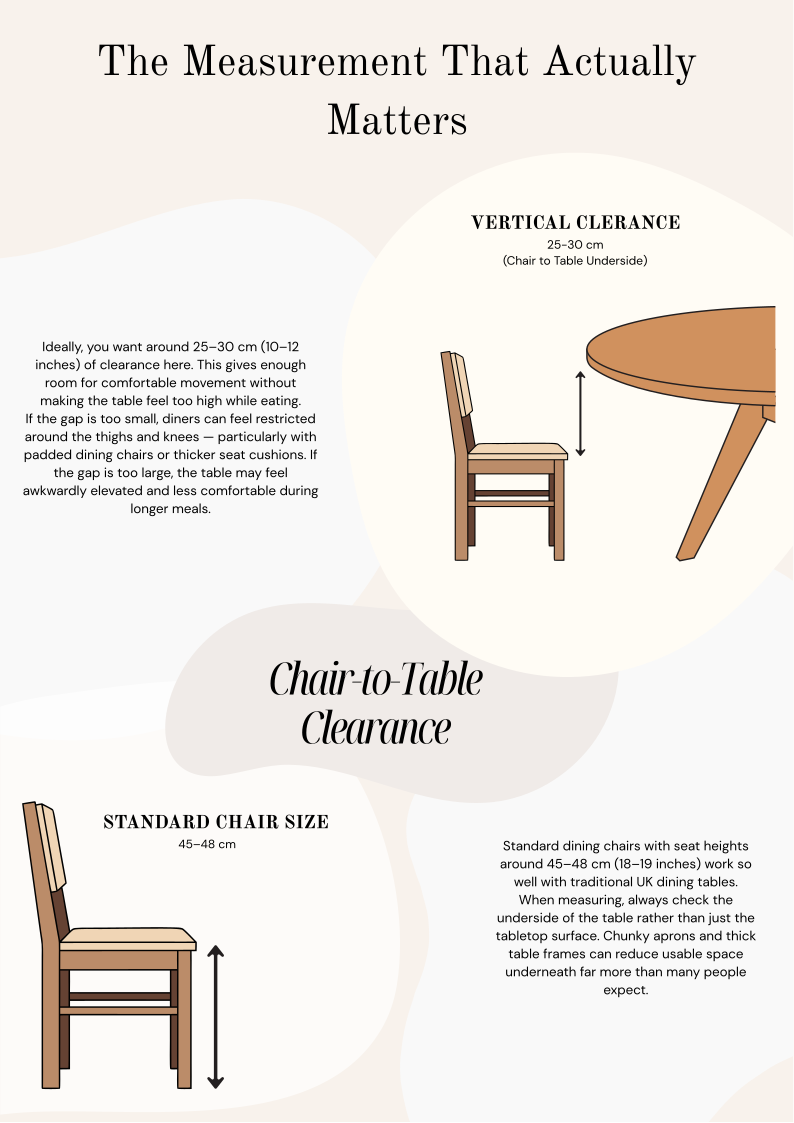
A dining table can technically fit your chairs while still feeling uncomfortable to sit at. Often, the issue is poor knee clearance underneath the table.
For comfortable everyday use, aim for at least:
- 60–66 cm (24–26 inches) of vertical knee clearance
- 45–50 cm (18–20 inches) of depth beneath the table
- Around 60 cm (24 inches) of width per person
These measurements allow diners to move naturally without constantly touching the table frame or neighbouring chairs.
Tables with slim legs or pedestal bases often provide better usable legroom than heavy boxed designs. This becomes especially important in smaller dining rooms where people need to move around the table more easily.
Clean-lined contemporary designs from the Florence dining table collection and Scandinavian-inspired pieces in the Edvard Olsen furniture range are particularly good examples of styles that balance proportions with practical seating space.
Matching the Right Chair Height to Your Table
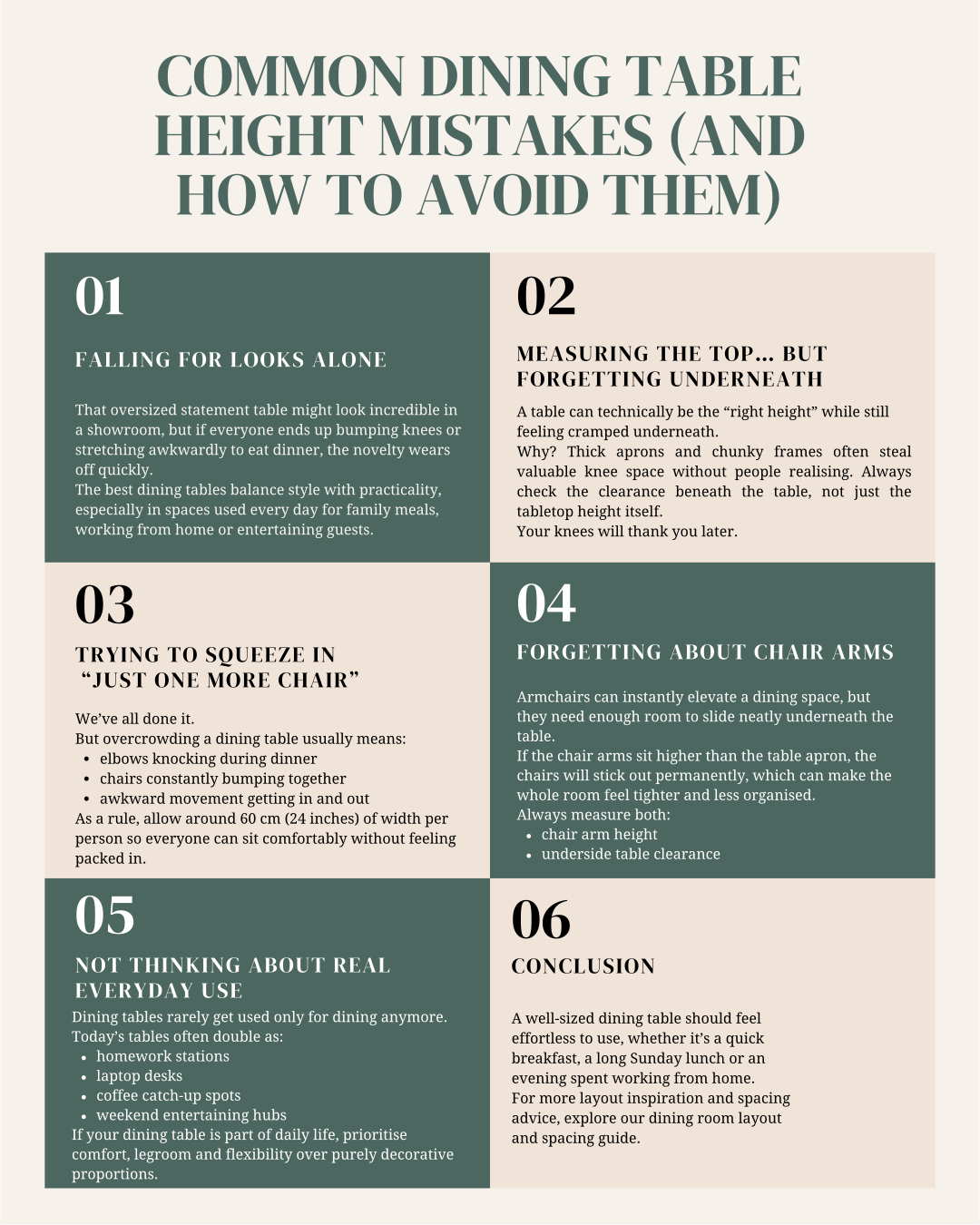
A dining table and chair should work together ergonomically, not just visually. Even a beautifully designed dining room can feel awkward if the seating height is mismatched.
As a general guide:
- Standard dining tables around 75 cm high pair best with chairs measuring 45–48 cm high
- Counter-height tables require taller stools around 61–66 cm high
- Bar-height tables typically need stools around 71–76 cm high
The aim is to create a natural seated position where arms can rest comfortably near tabletop level without shoulders lifting awkwardly.
If you are choosing upholstered dining chairs, remember that softer seats compress slightly when someone sits down. This can subtly improve comfort if measurements initially feel close.
Coordinated ranges such as the Queensbury dining furniture collection can simplify this process by pairing proportioned tables and chairs designed to work together.
Related products


%20–%20White&url=https://furniture.co.uk/product/florence-large-pedestal-round-dining-table-120cm-white/&media=https://furniture.co.uk/wp-content/uploads/2023/05/Florence-Pedestal-Table-in-White-1024x1024.jpg)


Standard Height vs Counter-Height Dining Tables
Counter-height dining tables have become increasingly popular in modern kitchens and open-plan layouts because they create a more relaxed, sociable feel. They can also help visually zone larger spaces.
That said, standard-height dining tables still offer several practical advantages.
They are generally:
- More comfortable for long meals
- Easier for children and older family members to use
- Better suited to mixed seating styles
- More versatile for formal and casual dining alike
Counter-height tables tend to work best in contemporary spaces where entertaining and informal dining are the priority rather than extended seated meals.
For most UK homes, especially where the dining table is used daily, standard height remains the most universally comfortable option.
How Different Table Designs Affect Comfort
The structure of the table itself has a surprisingly large impact on comfort.
Thick Aprons
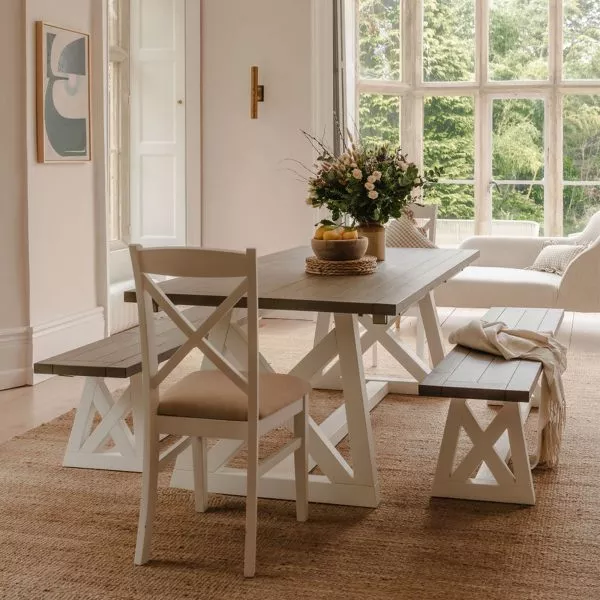
Traditional farmhouse-style tables often include deep aprons beneath the tabletop. While visually substantial, these can reduce knee space considerably.
Pedestal Bases
Round pedestal tables usually allow more flexible leg positioning because there are no corner legs to work around.
Slim Framed Tables
Minimalist tables with thinner tops and streamlined frames generally create a lighter feel both visually and physically.
Extendable Tables
Extension mechanisms can sometimes alter leg placement underneath the table, so it is worth checking how much seating space remains when fully extended.
If you regularly host guests, our extendable dining table buying guide explains what to look for when balancing flexibility with comfort.
Measuring Your Dining Space Properly
Before buying a dining table, take time to measure both the furniture and the surrounding space carefully.
Start by measuring:
- Floor to tabletop height
- Floor to underside clearance
- Chair seat height
- Chair arm height if applicable
You should also leave enough circulation space around the table itself. Ideally, allow at least 90 cm (35 inches) behind occupied chairs so people can move comfortably around the room.
In smaller dining areas, round tables can often improve flow and make the room feel less crowded. The round dining table collection works particularly well in compact UK homes and open-plan layouts.
FAQS
What is the standard dining table height in the UK?
Most UK dining tables measure between 74–76 cm (29–30 inches) high.
How much space should there be between a dining chair and table?
Ideally, leave 27–30 cm (10.5–12 inches) between the chair seat and the underside of the table.
What is the minimum knee clearance for a dining table?
Comfortable dining tables usually provide at least 65 cm (25.5 inches) from floor to apron underside.
Can dining armchairs fit under all tables?
No. Always check chair arm height against the underside clearance of the table apron before buying.
Are pedestal tables better for legroom?
Yes. Pedestal bases remove corner legs and usually create more flexible seating space.
What size dining chair works with a 75 cm table?
Most chairs with a seat height of 44–48 cm pair comfortably with a standard 75 cm dining table.

Share this:


